Whether you're new to bike tours or a seasoned cyclist, the Netherlands offers something genuinely special: a place where cycling isn't just accepted, it's woven into the fabric of daily life.
A Country Built for Cyclists
The Netherlands has over 22,000 miles of dedicated bike paths. That's not a typo — twenty-two thousand miles of smooth, well-marked routes designed specifically for cycling. The infrastructure here is unmatched anywhere in the world.
What does this mean for you? You'll ride on paths completely separated from car traffic, following signs as clear as any highway system. The terrain is famously flat — the highest point in the entire country is just 1,053 feet above sea level. No grueling climbs, no white-knuckle descents, just smooth, peaceful cycling through beautiful landscapes.
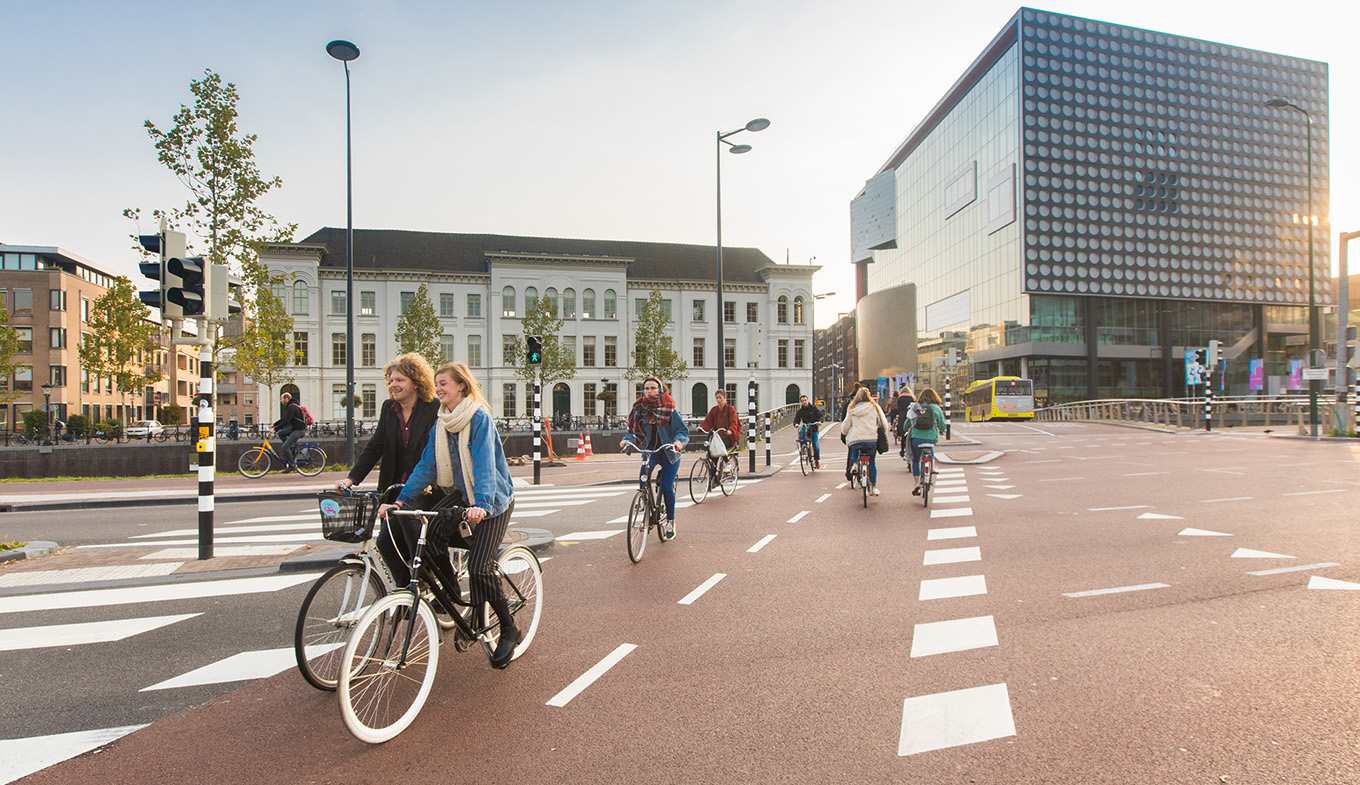
Everyone bikes here. Business people commute in suits. Parents transport kids in cargo bikes. Seniors run errands on two wheels. This cycling culture means drivers are patient and aware, cyclists have the right of way in most situations, and you're treated with genuine respect on the road.
The Springtime Phenomenon
From mid-March through May, something extraordinary happens in the Netherlands. The tulip fields bloom.
We're not talking about a few flower beds in a park. We're talking about millions of tulips with entire fields creating stripes of purple, yellow, red, and orange across the countryside. The scale is almost impossible to grasp until you're there, pedaling slowly through it.
The tradition goes back centuries. In the 1600s, tulip bulbs were so valuable they triggered an economic bubble (seriously — look up "Tulip Mania"). Today, the Netherlands produces 4.3 billion tulip bulbs annually, and the spring bloom has become one of Europe's most spectacular natural events.
But here's what most people don't realize: the best way to experience it isn't by tour bus or car. It's by bike. You're moving slowly enough to take it all in, but covering enough ground to see the full scope of the display. You can stop whenever you want, pedal through the fields on quiet farm roads, and experience the colors and scents up close.
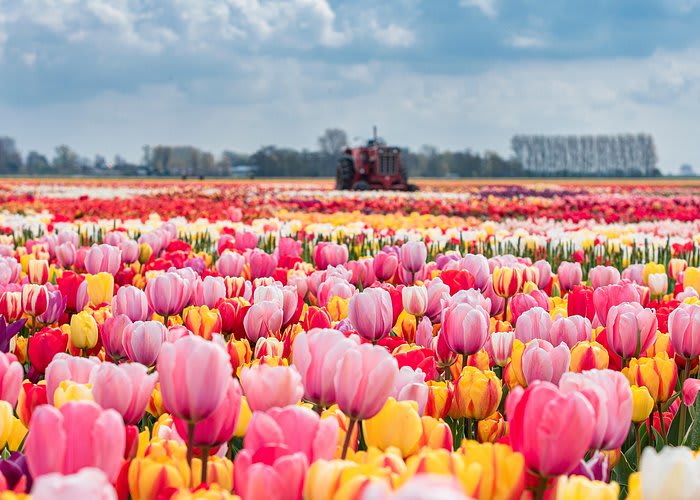
The Keukenhof Gardens, open only during bloom season, showcase seven million bulbs across 79 acres. It's stunning, and absolutely worth visiting, but so are the working farms you'll pass, where tulips are grown for export rather than display. There's something special about riding past fields being tended by farmers, seeing the flowers as part of the living, working landscape rather than just a tourist attraction.
Spring weather in the Netherlands is mild — typically 50-65°F — which is ideal for cycling. Not too hot, not too cold. The days are getting longer, the countryside is fresh and green, and there's a sense of renewal after winter. You'll find local orchards in bloom, fresh Dutch cheese at farm stands, and outdoor café terraces opening for the season.
Beyond the Flowers: Why Dutch Cycling Works
The tulips are the headliner, but they're not the whole story. The Netherlands offers year-round cycling that's hard to beat.
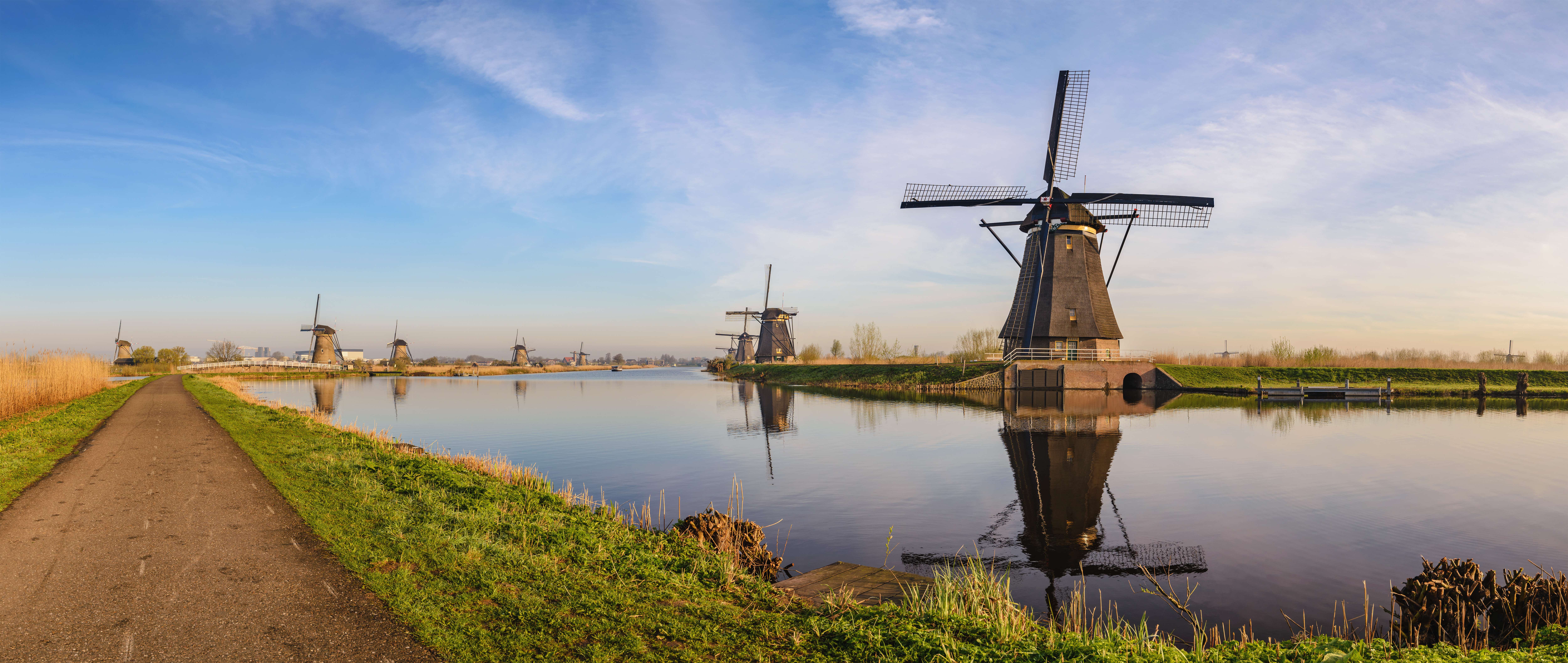
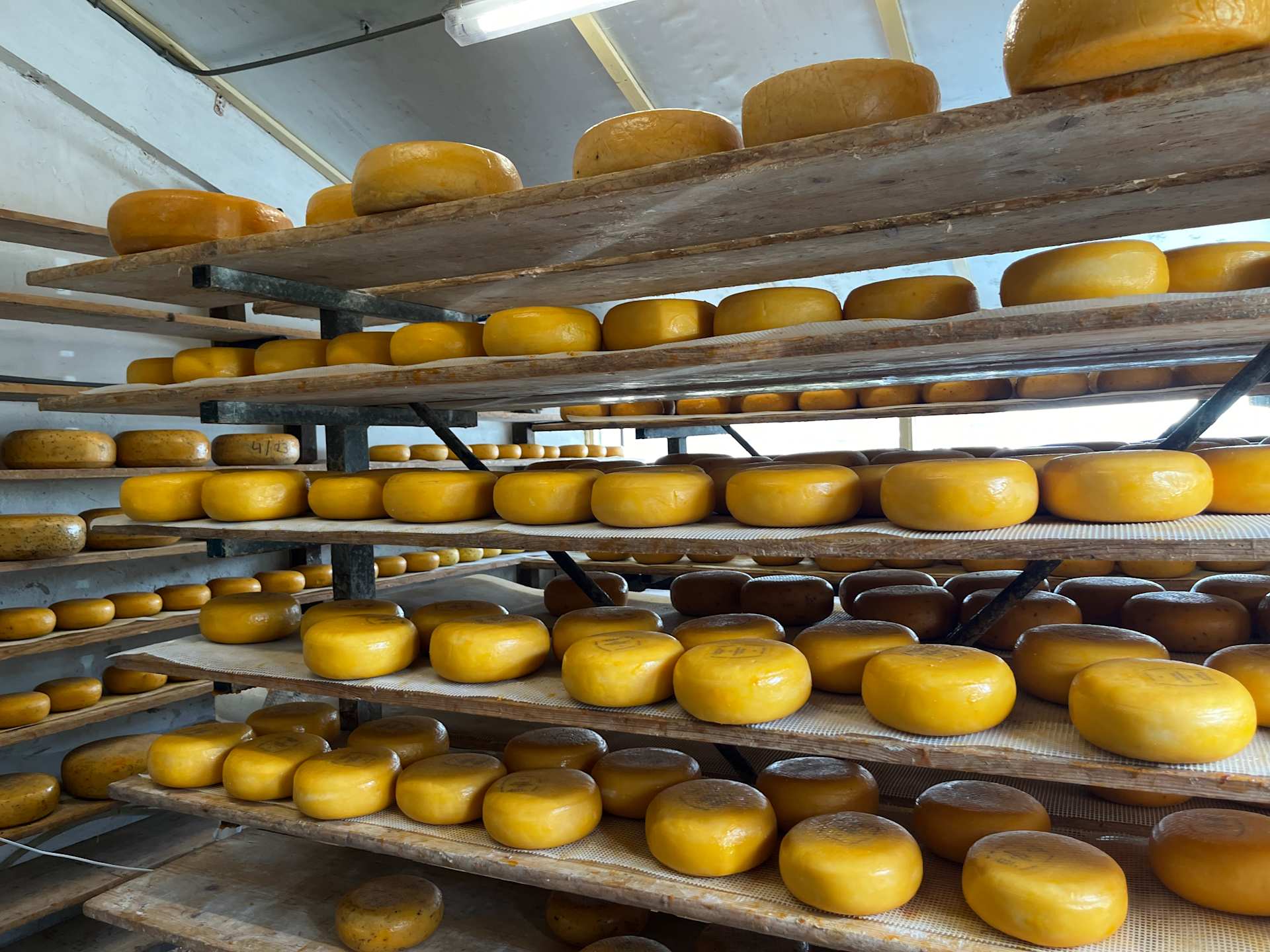
The landscape is uniquely beautiful. Canals crisscross the countryside, creating reflections of clouds and windmills. Historic villages pop up every few miles, each with its own character — half-timbered houses, narrow cobblestone streets, small churches with bell towers. Working windmills still grind grain using centuries-old methods — including the UNESCO-listed windmills at Kinderdijk, where 19 historic mills stand as a testament to Dutch water management ingenuity. Cheese farms offer tours and tastings of Gouda aged in traditional warehouses.
The country is compact. You can cover significant ground without feeling rushed. Amsterdam to the Belgian border? That's about 100 miles — easily done over several days with time to explore along the way.
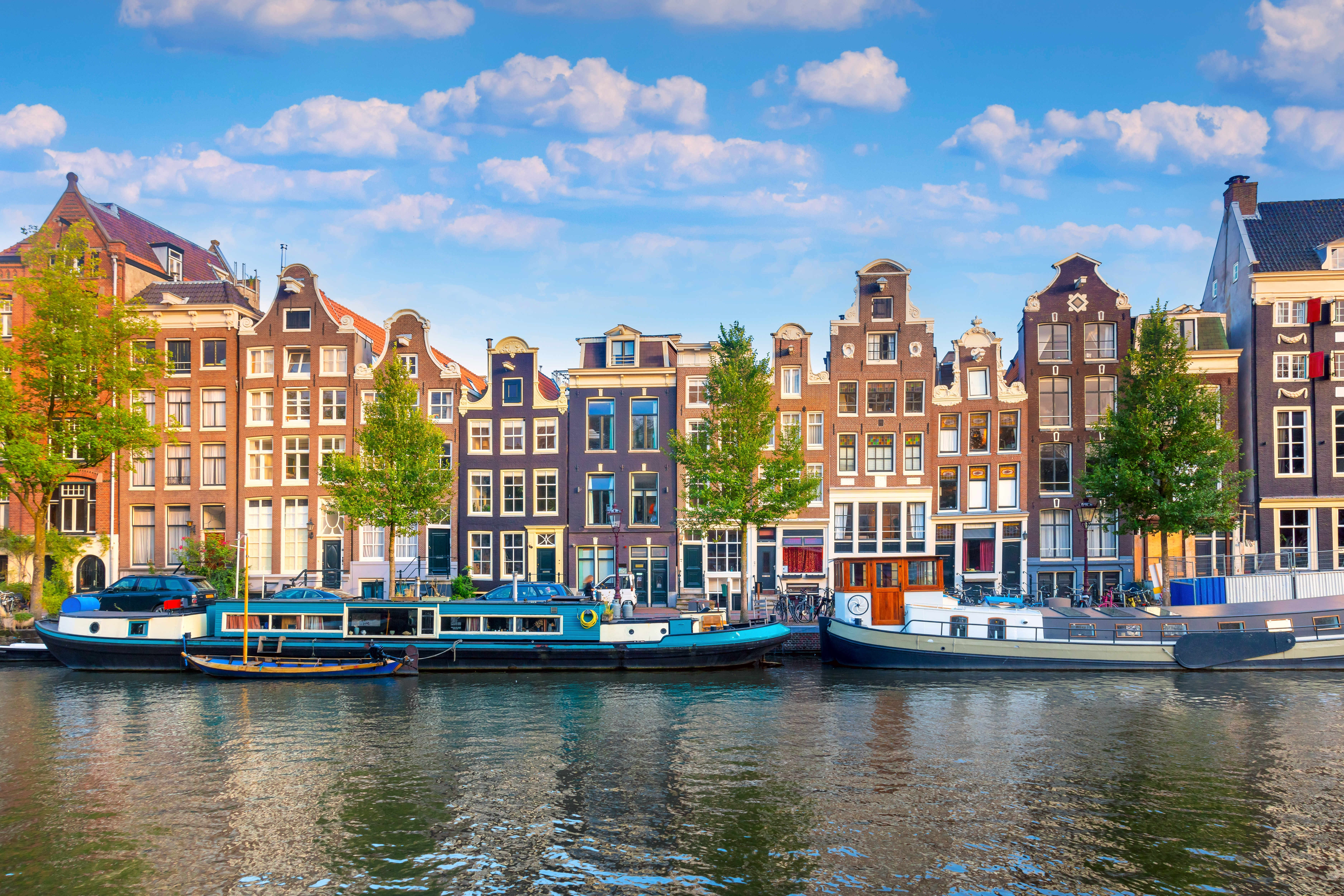
And the routes are genuinely enjoyable. You'll ride beside canals lined with houseboats, through nature reserves where you might spot herons and egrets, past fields of grazing cows and sheep, and into villages where locals wave from their gardens.
Different Ways to Experience Dutch Cycling
There are two main approaches to bike touring in the Netherlands, each with distinct advantages.
Inn-based tours have you staying in different accommodations each night. You pack your bag in the morning, and it's transported to your next hotel while you ride. This gives you maximum flexibility in your daily routes and lets you experience different towns and villages. You'll stay in small hotels and guesthouses that reflect local character — think canal-side buildings in historic town centers rather than chain hotels on highways.
Bike & Barge tours combine cycling with river cruising. Your accommodation is a small canal barge (typically 15-30 cabins) that travels with you, mooring in different towns. You unpack once and return to the same cabin each night. The barge becomes your floating hotel, moving while you sleep or relax after a ride. There's something uniquely relaxing about the combination — active days cycling, peaceful evenings on the water.
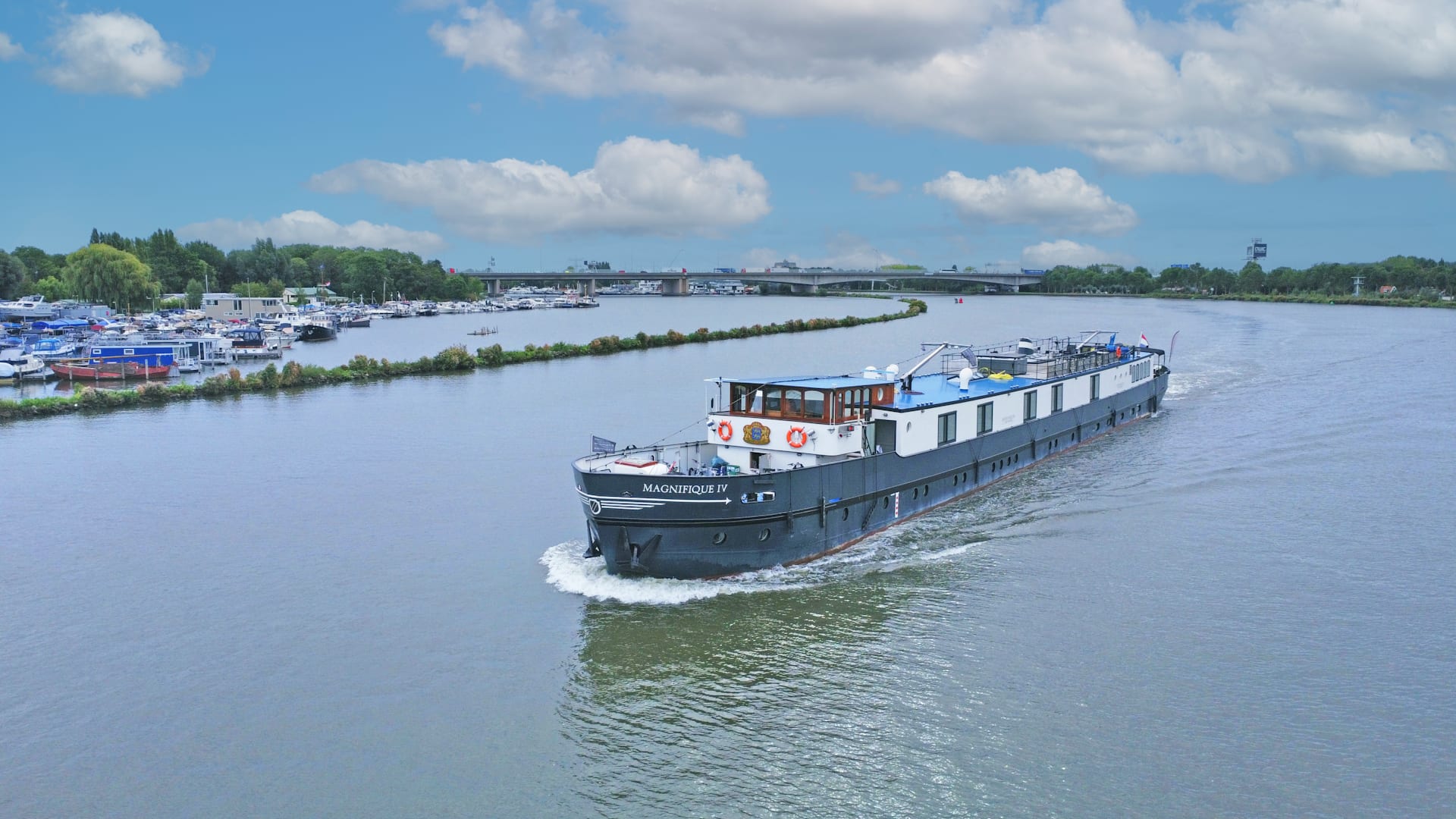
Both styles work well in the Netherlands. The choice comes down to personal preference: variety of accommodations versus the simplicity of unpacking once, and the experience of life on a canal barge.
Practical Considerations
Seasons: Spring (March-May) brings the tulips but also more tourists and higher prices. Summer (June-August) offers warmer weather, longer days, and green landscapes without the crowds. Fall (September-October) has mild temperatures and autumn colors. The cycling infrastructure works year-round, so there's no wrong time to visit — it's more about what you want to see and experience.
Difficulty level: Dutch cycling is about as easy as cycling gets. The flat terrain means anyone with basic bike fitness can handle the distances. Daily rides typically range from 20-50 miles, but you're never far from your support van if you want to shorten a day. E-bikes are available if you want extra assistance.
Navigation: The Dutch cycling network uses a numbered junction system (knooppunten) that's remarkably easy to follow. You're given a list of junction numbers to follow, and signs at each junction point you in the right direction. GPS apps work great too, but honestly, the junction system is so good that many locals don't bother with electronic navigation.
Language: Nearly everyone in the Netherlands speaks English fluently. You'll have no trouble communicating in hotels, restaurants, shops, or asking directions from locals.
What You'll Actually Do
A typical day starts with breakfast at your hotel or on your barge. Your guide provides a brief overview of the route — highlights to look for, optional stops, where lunch will be. Then you're off, riding at your own pace with turn-by-turn navigation.
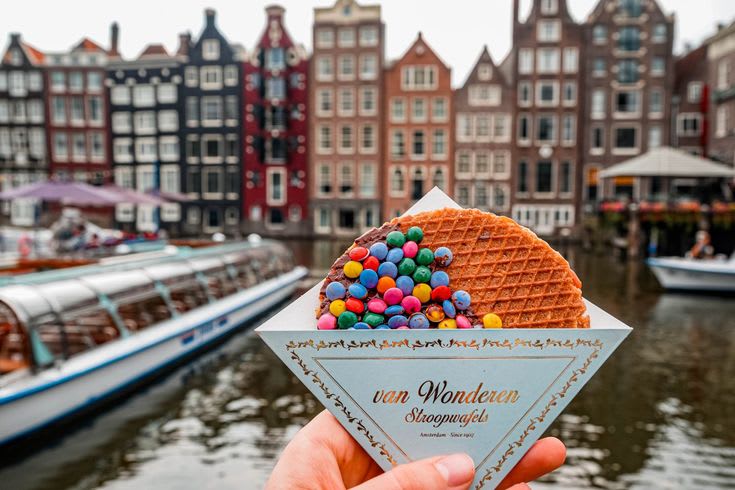
You might stop mid-morning at a windmill that's been converted to a café, ordering coffee and a fresh stroopwafel (two thin waffles with caramel syrup between them — trust us, they're addictive). Lunch could be a picnic by a canal or a stop in a village at a local café.
Afternoon riding brings you to your next destination. You'll arrive with time to explore the town, rest, maybe take a canal cruise or visit a local museum. Dinner is often at a local restaurant, where you'll discover that Dutch cuisine is heartier and more interesting than its reputation suggests. Fresh seafood, locally raised beef, and vegetables from nearby farms all feature prominently.
Small groups (typically 10-15 people) mean you can chat with fellow travelers or enjoy solitude as you prefer. Some days you might ride with others, other days you'll go solo — whatever feels right.
The Dutch Cycling Experience
There's something about cycling in the Netherlands that's hard to put into words. It's not dramatic mountain scenery or remote wilderness. It's not ancient ruins or exotic cultures. It's quieter than that — and somehow just as powerful.
It's the rhythm of flat, easy cycling that lets your mind wander. It's the small discoveries: a cheese shop in a village barely on the map, a field of tulips that's somehow even more colorful than the last one, a conversation with a local who stops to ask where you're from and ends up recommending their favorite bakery.
It's the realization that cycling doesn't have to be about conquering challenging terrain. Sometimes the best rides are the easy ones, where you can relax completely and just be present in the moment.
The Netherlands proves that perfect cycling infrastructure changes everything. When you don't have to think about traffic or navigation, when the routes are beautiful and the distances are manageable, cycling becomes pure joy — the way it probably felt when you first learned to ride a bike as a kid.
That's the real magic of Dutch cycling. It brings back that sense of freedom and possibility. And whether you're there for the tulips or the windmills, the history or the cheese, the experience stays with you long after you've returned home.