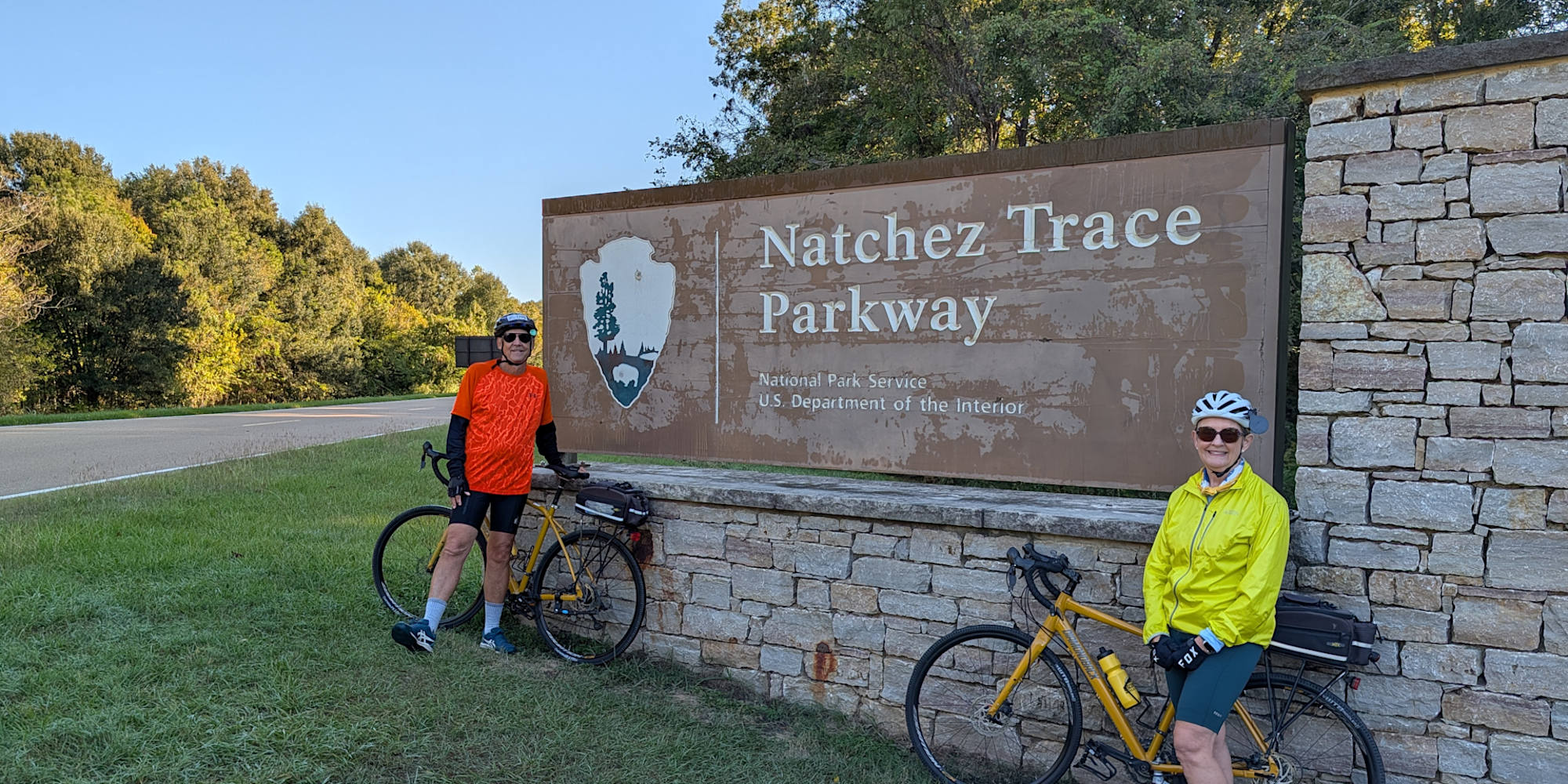
The road may be quiet today, but the Natchez Trace has been carrying people and stories for thousands of years. Long before it became a scenic parkway, this corridor connected Indigenous communities. Later came traders, boatmen, enslaved people, soldiers and settlers, each leaving a very different mark on the landscape.
Cycling the southern reaches of the Trace gives you time to encounter those histories where they happened. On our 6-Day Natchez Trace Parkway Historical Bike Tour, rides through Mississippi are paired with stops at Emerald Mound, Natchez, Windsor Ruins and Vicksburg, before the journey concludes in Jackson with the Mississippi Civil Rights Museum.
This is not one neat story of the American South. It is many stories layered over the same landscape, and traveling through it by bike gives you space to stop, look and understand more of what came before.
Indigenous History Along the Natchez Trace
To understand the Natchez Trace, you have to begin long before European settlement.
The Old Trace was not originally one road. It developed from a network of trails used for travel and trade through the homelands of the Natchez, Chickasaw and Choctaw nations. The modern Natchez Trace Parkway today connects hundreds of archaeological sites as well as burial and ceremonial mounds.
These histories are not simply part of a distant past. The Chickasaw Nation, Choctaw Nation and Mississippi Band of Choctaw Indians are living communities today.
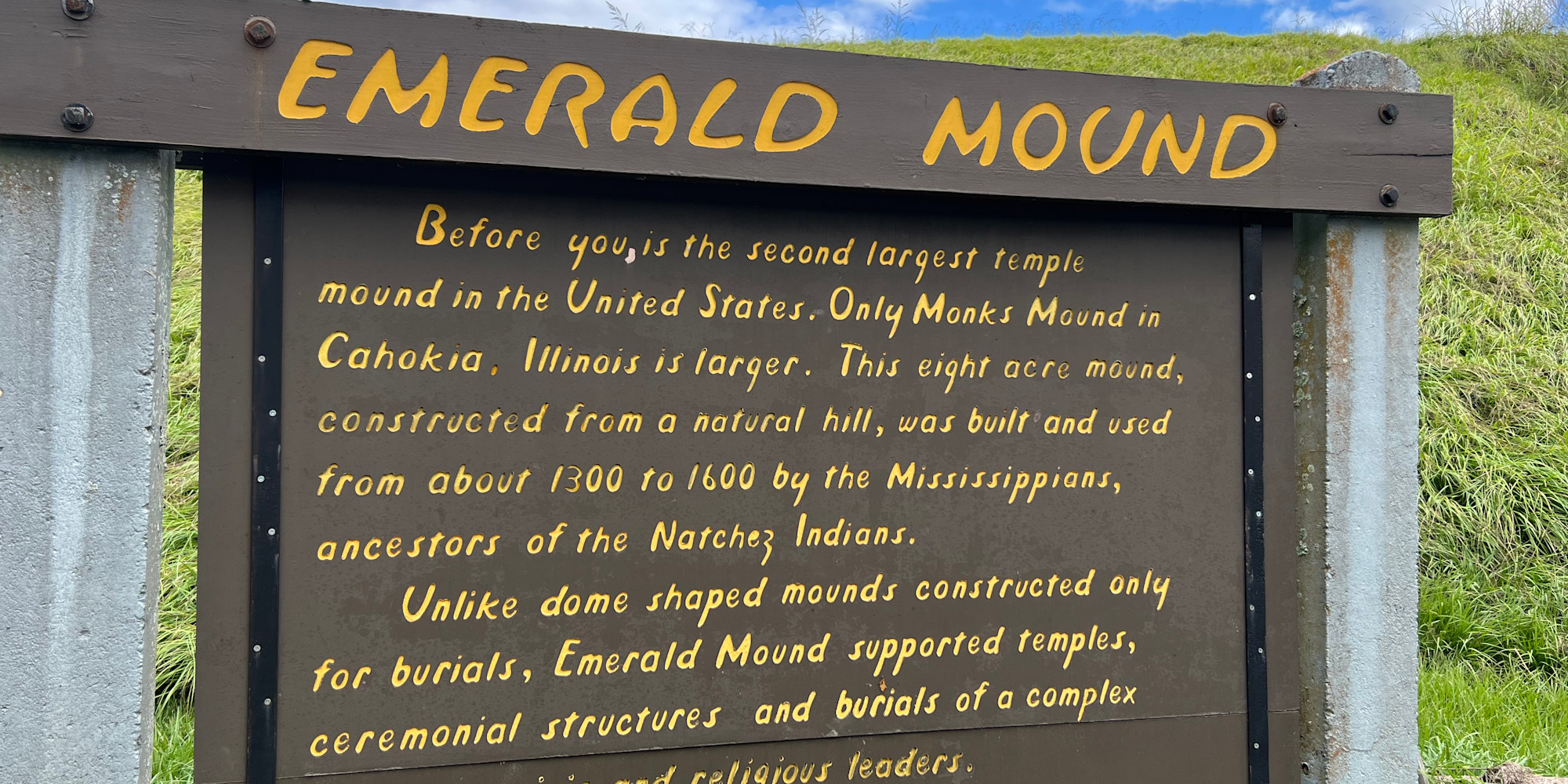
One of the places where the earlier history of the region becomes particularly tangible on our tour is Emerald Mound, identified by the National Park Service as the second-largest mound in the United States.
Elsewhere, places along the Trace reflect a more difficult period as the United States expanded and Native nations were dispossessed of their homelands. Routes associated with the forced removals known as the Trail of Tears cross the Parkway in several places.
Understanding that deeper history changes how you see the road beneath your wheels. The modern parkway may be relatively recent, but the corridor it follows most certainly is not.
River Commerce and the Travelers of the Old Trace
By the late 18th and early 19th centuries, the Trace had taken on another role as a commercial artery connected to the Mississippi River.
Boatmen transported goods down the Ohio and Mississippi rivers to markets such as Natchez and New Orleans aboard flatboats. Because those boats could not simply make the journey back upstream, they were often sold for lumber. The boatmen, known as “Kaintucks,” then faced a journey of hundreds of miles home on foot or horseback using the Old Trace.
Simple inns known as stands developed along the route to accommodate travelers. On today’s tour, you encounter names that preserve parts of this geography, including Dean’s Stand and Red Bluff Stand. Another ride visits the deeply worn Sunken Trace, a preserved section of the original route.
But the commercial story of this era cannot be separated from slavery. During the height of the domestic slave trade, enslaved people were forcibly marched along the Old Trace toward the large slave market in Natchez and plantations elsewhere in the region.
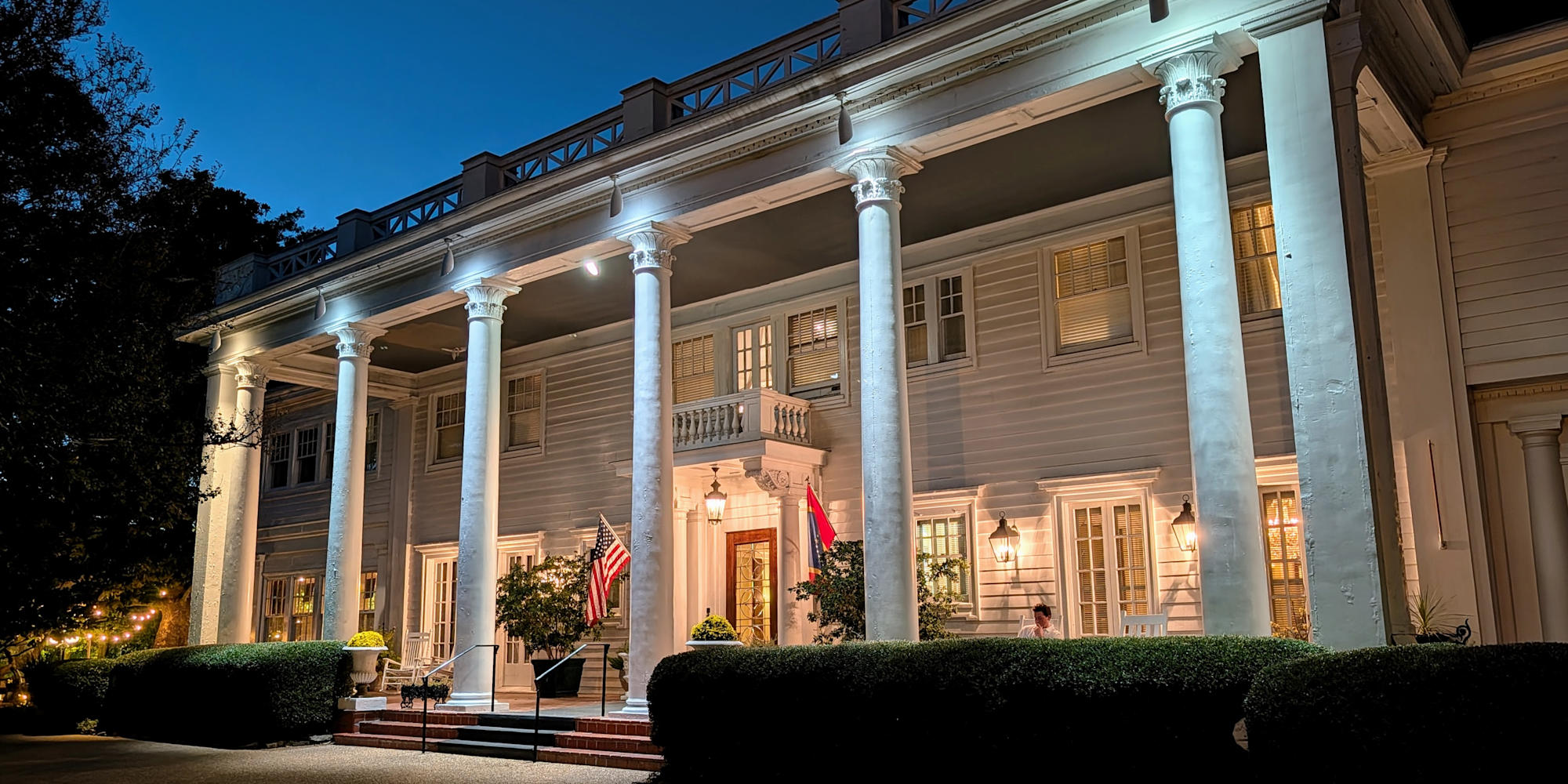
That history matters when visiting the grand homes, estates and plantation landscapes that remain today. They can be architecturally striking, but understanding the labor and exploitation on which that wealth depended provides essential context.
The tour also visits the Natchez Museum of African American History and Culture, helping broaden the stories encountered while exploring Natchez.
Cycling Through Mississippi’s Civil War History
The next historical layer becomes particularly visible around Raymond and Vicksburg.
Early in the tour, the route passes the location of the Battle of Raymond, where troops under Union General Ulysses S. Grant fought the Confederate brigade of General John Gregg on May 8, 1863. You also pass Dean’s Stand, which Grant used as a headquarters following the battle.
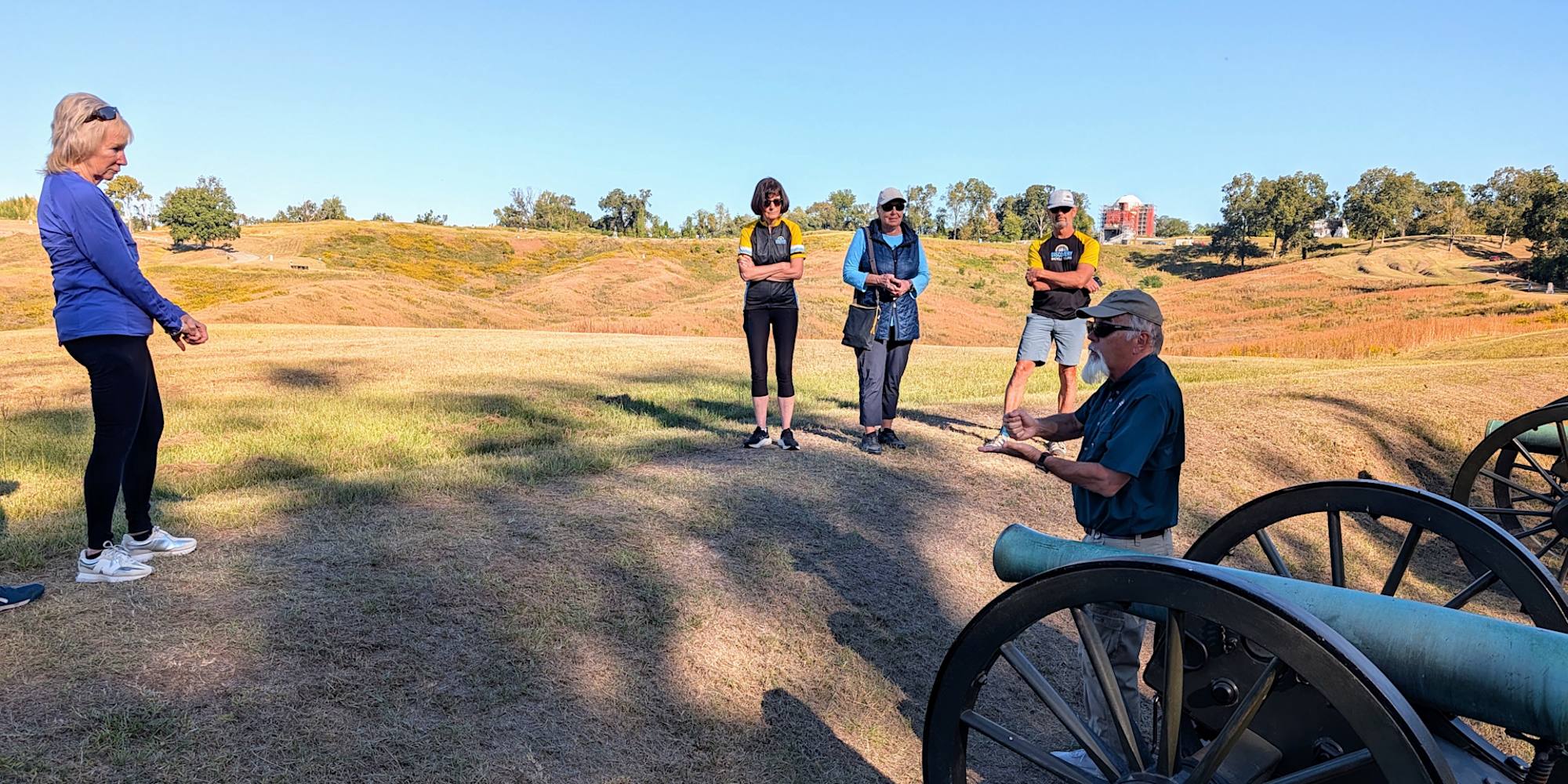
Later, a dedicated day in Vicksburg provides a deeper look at the Civil War. Control of Vicksburg meant control of a strategically vital position on the Mississippi River. The campaign culminated in a 47-day siege, ending with the Confederate surrender to Grant on July 4, 1863.
On the tour, you explore Vicksburg’s history on a private tour and visit the USS Cairo Museum, which tells part of the story of naval warfare during the campaign.
The landscape itself is important here. Instead of encountering the Civil War only through dates and names, you are in the places where geography, the Mississippi River and military decisions intersected.
And the story continues beyond the war. The tour passes Alcorn State University, founded in 1871 by Mississippi’s Reconstruction-era legislature to provide higher education to freedmen. Civil War history is not treated as an endpoint; the journey continues into Reconstruction and the long struggle over what freedom and citizenship would mean afterward.
Looking Beyond the Grandeur of the Antebellum South
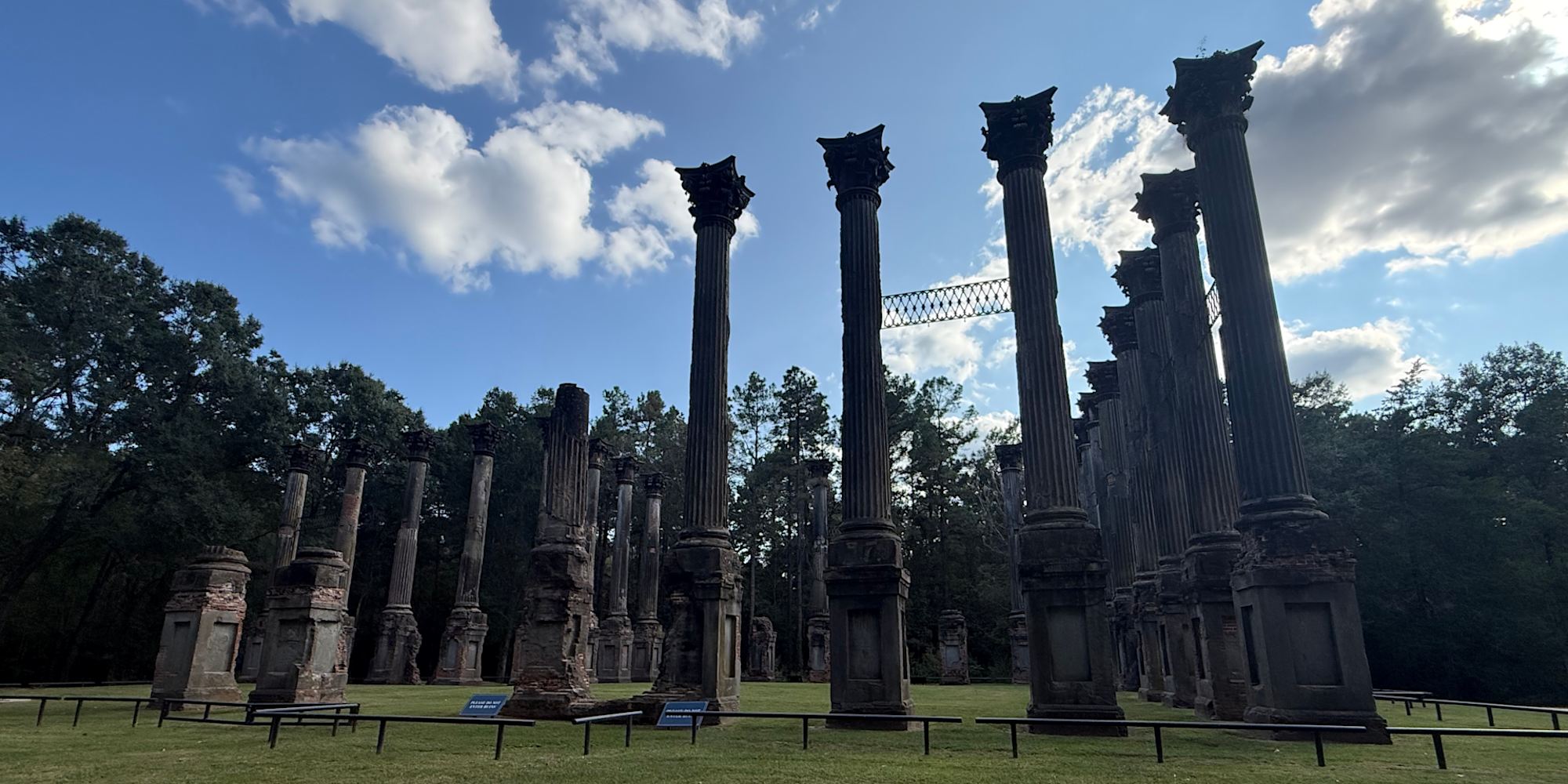
Cycling around Natchez and the surrounding countryside brings riders into a landscape strongly associated with the antebellum South.
Among the tour stops are Melrose Estate and the Windsor Ruins. The latter was once part of a plantation encompassing more than 2,600 acres; today, 23 columns remain standing.
These places are visually striking, but there is a more important story behind the architecture. Mississippi’s plantation economy was built around enslaved labor and cotton, within a wider history that includes the taking of Chickasaw and Choctaw lands, the expansion of slavery, the Civil War and Reconstruction.
Rather than seeing a columned house or ruin only as a romantic reminder of another age, it is worth asking broader questions: Who built this? Who worked here? Where did the wealth come from? How did the systems established during this period continue to shape Mississippi after emancipation?
Cycling cannot answer all those questions, of course. But moving slowly through the landscape means there is time to notice what remains, visit museums and historic sites, and place what you are seeing within a much larger story.
Bringing the Journey Forward to Mississippi’s Civil Rights Movement
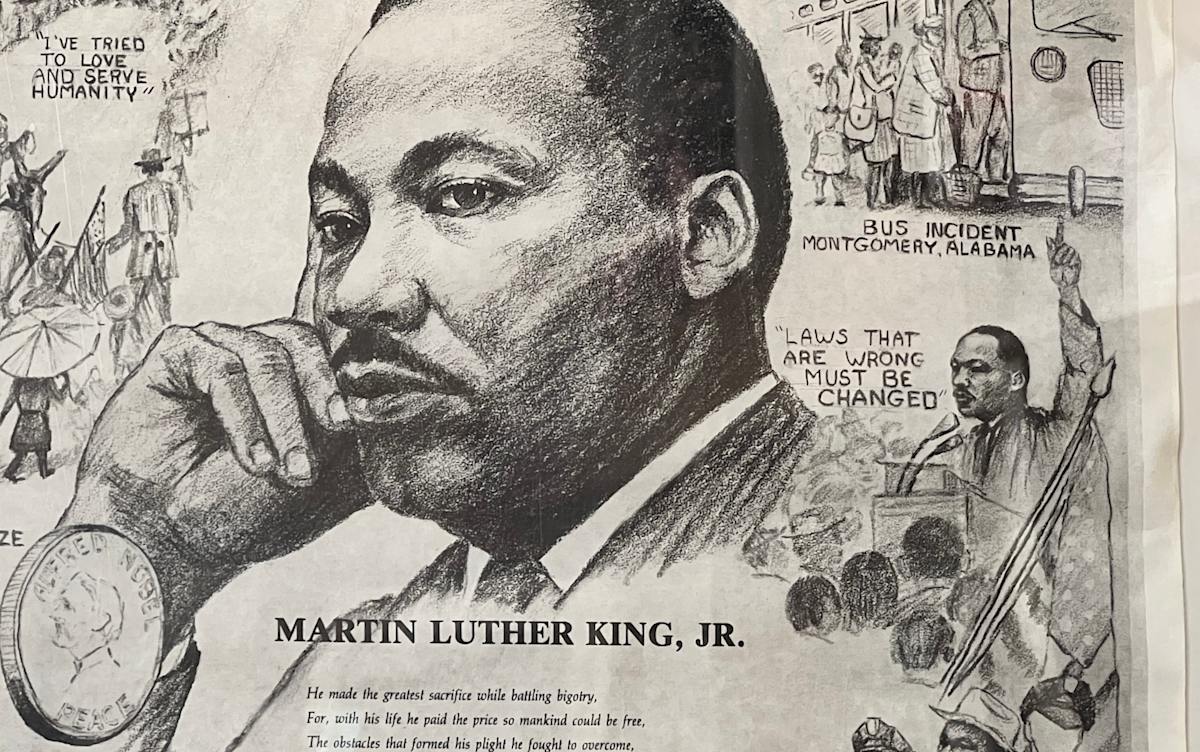
The historical arc of the trip does not finish in the 1800s.
The final days bring you to Jackson, where a visit to the Mississippi Civil Rights Museum takes the story firmly into the 20th century. It is a fitting conclusion because many of the themes encountered earlier in the journey, including land, race, freedom, power and citizenship, continued to shape life in Mississippi long after the Civil War and Reconstruction.
The museum’s galleries trace Mississippi’s Civil Rights Movement and introduce visitors to people including Medgar Evers, Fannie Lou Hamer and Vernon Dahmer. Exhibitions cover the Freedom Riders, segregation, Freedom Summer, Black political empowerment and the continuing legacy of the movement.
It is an important final perspective. After days spent encountering ancient Indigenous sites, the pathways of early commerce, plantations, Civil War battlefields and Reconstruction history, Jackson brings the journey into a period whose consequences remain much closer to the present.
The quiet scenery of the Trace is certainly part of its appeal as a cycling route. But by the end of the journey, it is hard to view the landscape as scenery alone.
More Than a Road Through Mississippi
The Natchez Trace is sometimes described as a historic road, but even that does not quite capture it.
It existed before the road. It was a network of Indigenous pathways, a trading corridor and a route home for river boatmen. Enslaved people were forced along sections of it. The surrounding landscape witnessed plantation slavery, Civil War and Reconstruction, while Mississippi would later become one of the central battlegrounds of the American Civil Rights Movement.
Cycling through that landscape offers a different way to encounter those histories. You have time between destinations, time to notice the places you are passing through, and time to connect what you see today with the people whose lives shaped the region.
The road may be quiet. Its history is not.
Ready to Cycle Through the History of the Natchez Trace?
Our 6-Day Natchez Trace Parkway Historical Bike Tour combines cycling along the southern portion of the Parkway with visits to Natchez, Emerald Mound, Windsor Ruins, historic Vicksburg and the Mississippi Civil Rights Museum in Jackson. The tour is rated Level 3, uses 100% paved riding surfaces, and offers daily rides through the Mississippi landscape alongside its cultural and historic experiences.